Is This Link Safe?
Got a link in a text, email or message and not sure about it? Paste it below. The checker reads the address for the tricks scammers use and tells you, in plain words, where it really goes. The link is never opened and nothing is sent anywhere.
- Free
- No download or sign-up
- Runs in your browser
This checks the address only. It can't see the page itself or know about brand-new scam sites, so "no warning signs" never means "definitely safe". For a second opinion, paste the link into Google Safe Browsing or VirusTotal.
How to read a link in five seconds
Every web address has one part that decides where you actually go: the site name, the last part before the first single slash. In https://login.northwaybank.com/account it is northwaybank.com. Everything in front of it can be made up by whoever owns the site.
| Link | Where it really goes | Verdict |
|---|---|---|
https://www.paypal.com/signin | paypal.com | Real |
https://paypal.com.secure-login.top/verify | secure-login.top | Fake: the brand is just decoration at the front |
https://paypa1.com/login | paypa1.com | Fake: a number 1 in place of the letter l |
https://[email protected] | evil-site.ru | Fake: everything before @ is ignored |
https://bit.ly/3xYzAbc | Unknown until opened | Careful: short links hide the destination |
The tricks this checker looks for
- Brand names on someone else's site:
amazon-refund-support.comis not Amazon. - Misspellings and swapped characters:
rnicrosoft.com(r + n looks like m),paypa1.com. - Lookalike letters: addresses that use letters from other alphabets, which look identical on screen.
- The @ trick and raw IP addresses: ways to hide the real destination.
- Shortened links, unusual endings like .top or .xyz, and long chains of subdomains.
- Direct downloads of programs and apps (.exe, .apk and similar).
- Pressure words such as verify, unlock or suspended in a suspicious address.
Safer habits than any checker
- Don't log in from a link you didn't ask for. Open the app, or type the address yourself.
- Never share one-time codes. No real company will ask you to read one back.
- Slow down when a message is urgent. Pressure is the scammer's main tool.
- Check with the sender another way: call the number on your card or the company's official website.
Already clicked? Follow what to do if you clicked a phishing link. Want to practise? Take the Spot the Scam quiz, and read about the scams going around right now.
Link checker FAQ
How do I check if a link is safe without clicking it?
Copy it (on a phone, press and hold the link and choose Copy link) and paste it here. The checker only reads the text of the address; it never opens the page.
Can this tell me for sure that a link is safe?
No. It catches the common tricks in the address, but a brand-new scam site with an ordinary-looking name can still pass. Treat any unexpected link that asks for a login, payment or personal details as suspicious.
Is the link I paste sent anywhere?
No. The check runs entirely in your browser. The link isn't sent to us or to anyone else, and it isn't saved.
What does https or a padlock mean?
Only that the connection is encrypted. Scam sites use https too, so the padlock doesn't mean the site is honest.
More tools
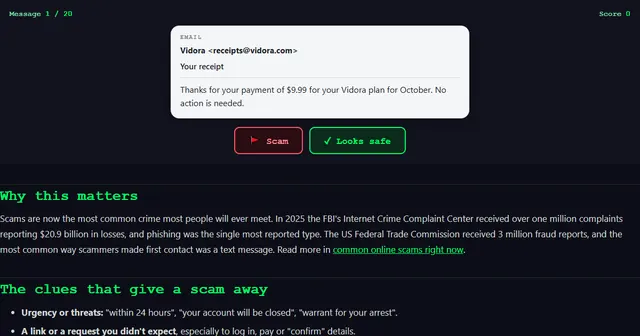 Spot the ScamA 20-message phishing quiz that shows the clues.
 Password Strength CheckerHow long would your password take to crack?
 Password GeneratorStrong random passwords, made in your browser.
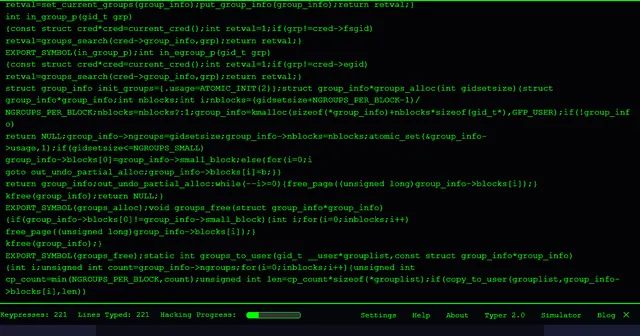 Hacker TyperThe classic: mash any key, get lines of kernel code.
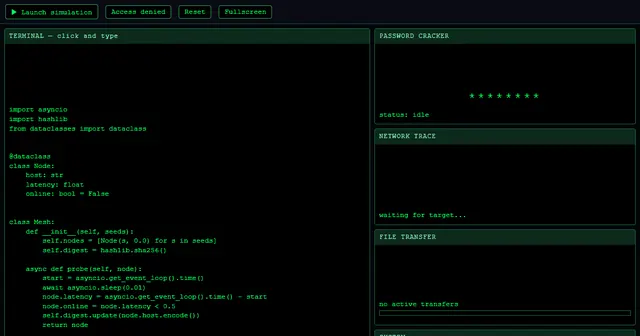 Hacker SimulatorA full fake hacking dashboard with one click.
 Fake Update ScreenWindows, Mac and more: an update that never finishes.
 Matrix RainFalling green code with colour, speed and size controls.
 White ScreenPure white for light, tracing and pixel checks.